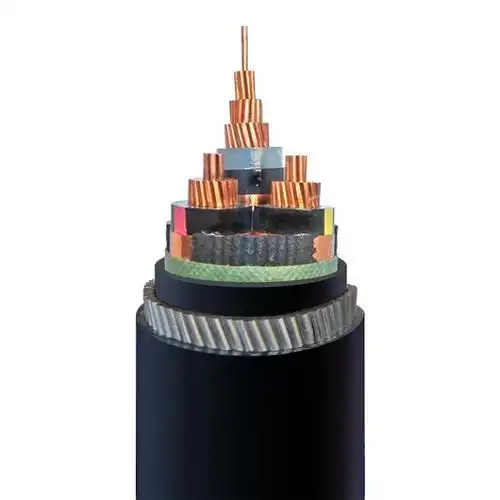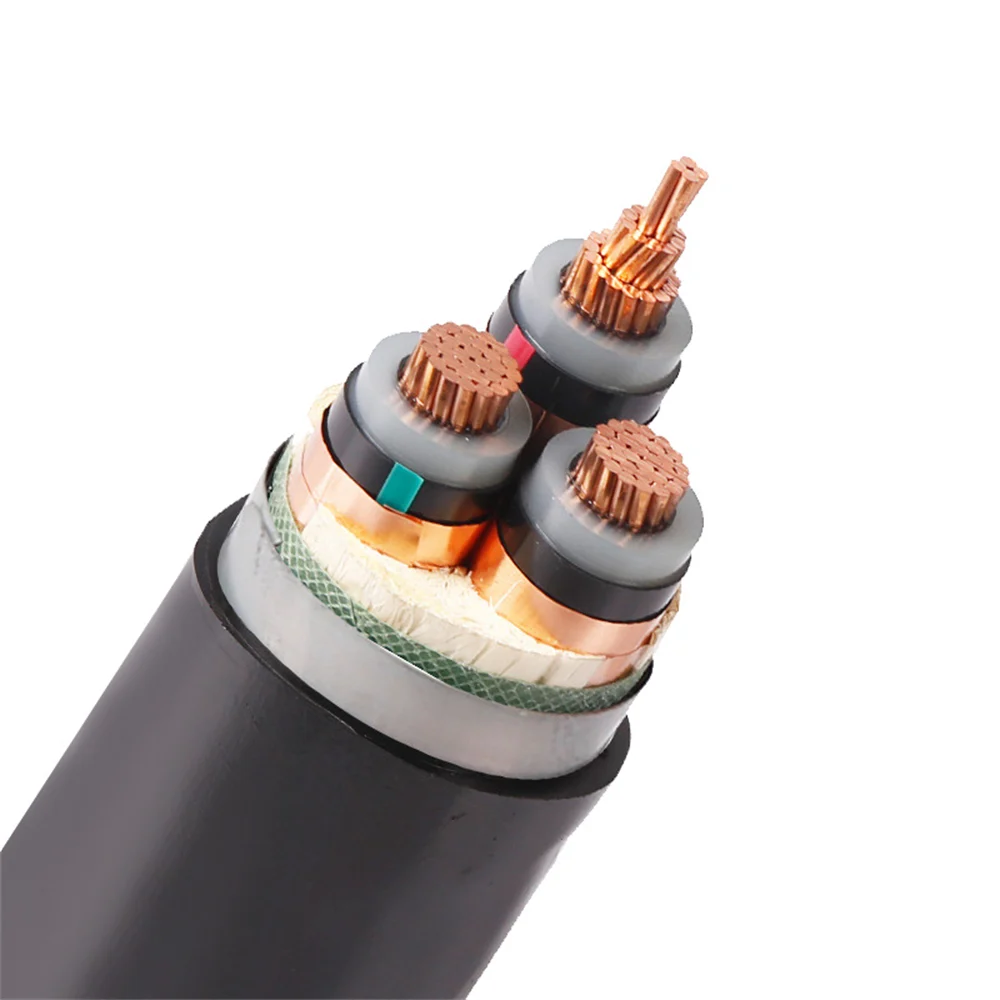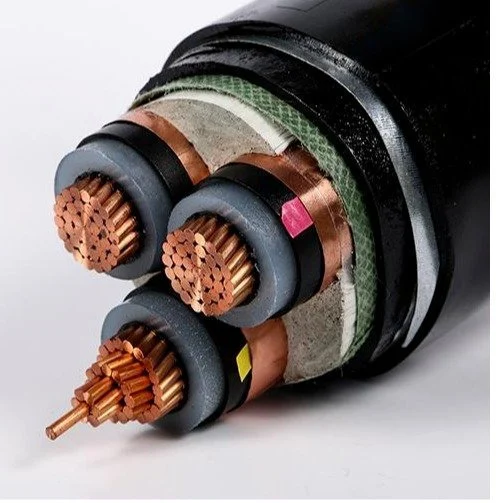





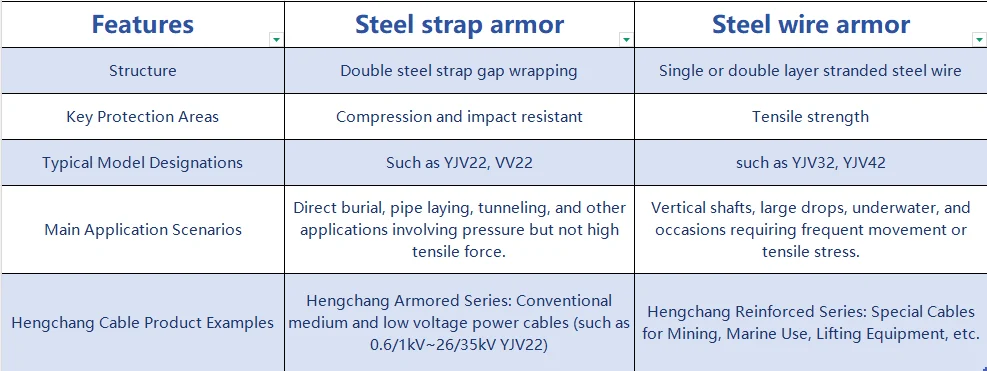
Armored cables mainly come in two types: steel tape armored and steel wire armored. Their core difference lies in the focus of protection, allowing them to adapt to different engineering environments.
The table below clearly summarizes their key differences and applicable scenarios:
How to choose the correct armor type for a project?
The selection mainly depends on the cable’s stress distribution and environment:
Tensile stress considerations: If the laying route has vertical sections, large drops, or is subject to long-term tensile stress (such as in mines, high-rise shafts, and bridges), steel wire armor must be selected.
Compression considerations: If primarily used for direct underground burial, mainly to prevent soil pressure, excavation impact, or rodent damage, steel tape armor is usually a more cost-effective choice.
Environmental considerations: In environments with strong corrosion (such as chemical industrial areas or coastal areas) or requiring a non-magnetic environment, special armor materials such as galvanized steel wire, plastic-coated steel wire, or stainless steel tape can be selected.
Hengchang Cable’s Professional Support
At Hengchang Cable, we not only offer the full range of standard armored cables mentioned above, but also provide professional selection support:
Precise Matching: Based on your specific laying path, stress analysis, and environmental conditions, we recommend the most economical and efficient type.
Customized Solutions: For special environments (such as high corrosion, high and low temperatures, flame retardant Class A), we can provide customized armoring materials and structural solutions.
Technical Guarantee: All products strictly adhere to national standards (GB/T 12706, etc.) and international standards, and we provide complete technical parameters and after-sales support.
To recommend the most specific product model for you, could you tell me what project your cable will be used for (e.g., mines, factory power distribution, offshore platforms, etc.) and the main laying method (e.g., direct burial, conduit, shaft, or along cable trays)?